Serpentswood Motte. That’s what I decided I will continue to call what we up until now have dubbed the Lizard’s Keep. It’s not the troglodytes’ keep. Upon careful reflection I decided that I would refuse to cede linguistic ground to the idea that it might be. Names are important. It’s why I forfeited my name and chose my own.
And so I choose Serpentswood Motte. It sits on a hillock in a wooded area and it was infested with serpent-worshiping lizards when we found it. The name suits it perfectly. Later, when the keep has been reclaimed and refortified, we can consider renaming it to something less ominous sounding.
5th Day, 1st Ride, 10th Month, 1374th Year
Right before the troglodyte and gnoll forces reached Glister they seemed to turn on one another. Perhaps this already started much earlier, but it was incredibly beneficial to the defense of the town. Their forces withdrew and we could survey the damage they had done, which turned out to be minimal.
Because we had arrived from the east, coming over in barges from The Range to The Hoof, I decided to get some rest in Jago’s hut. I was dead tired and probably wouldn’t have been able to make the trip to Wizard’s Hill without collapsing. Jago and Widukin decided to rest as well, while Quentyn made sure he was seen in and around town. David and his ward prepared to take care of the wounded militia men and villagers.
I am not sure I ever stopped to consider that Jago and Widukin shared a hut together. When we came in and bedded down for a few hours, I remember thinking about it for a few seconds before sleep found me. I don’t quite recall what I thought about it at the time, but now that I have some time to reflect upon it further, I think it’s remarkable. I am not one to cast stones, of course, considering my own history, it’s remarkable because rural people tend to be isolated and superstitious about this sort of thing. In the case of Jago and Widukin they might simply be sharing a hut. They bedded down in separate cots after all, though this could have been a bit of theatre for my benefit.
When I awoke later in the day, I felt groggy and disoriented. I forced myself to get up, and I was once again confronted by the disparity between my body and mind. The fog of sleep was easily shaken from my mind, but the sluggishness that came along with it lingered much, much longer.
I forced myself to eat something that my stomach would accept and would cause any trouble later in the day, and I went through my preparatory ritual. We would be heading back out to Serpentswood Motte to relieve Ser Fosco and the men we left behind, and we’d likely have to cross through hostile territory to get there. Once again, I felt like my frailty was becoming a serious problem and so I spent some extra time reading through the abjuration spells I have collected over time. My collection has grown quite considerably, and I believe it is time for me to focus on some basic protective spells if I am to continue putting myself in harm’s path the way I have in the last few weeks.
Eventually, we all met up back at The Hoof in order to take several barges. It had been decided that the fastest and likely safest course to make our way back to Serpentswood Motte was to go by water. Gilbert, who had the most experience traversing the waters of the Shadowed Lake, arrived in a kayak, ready to lead us east.
Quentyn had assembled another party of able-bodied men to accompany us, and I recognised a few faces in their midst. We divided ourselves across several barges and we started to head east.

After several hours we spotted a large group of ogres and gnolls on the northern bank, lead by the horned ogre. Whispers of “blue giant” went through our group as tensions rose, which irked me. I have read about giants, and from all accounts a giant is to an ogre as a human is to a halfling.
One of the gnolls was carrying a stick with a white cloth attached to the end of it. It seemed they wanted to parlay. Quentyn took them up on the offer and one of our barges slowly made its way towards the northern bank. We had decided to take a smaller group of people to talk, the rest stayed behind on the other barge.
When we came within distance, I noticed that the horned ogre was somewhat smaller than the other ogres, more hunched but with a clear, intelligent look in its eyes. The arcane abilities of the horned ogre was clearly not innate, but learned, like mine. A chill went down my spine as its gaze settled on me for a moment and again, the only thing I could think of was how ill prepared I am in defense.
The horned ogre tried to convince us to give him the bloodstone. The way he put it, he was doing us a favour by taking it from us. That he turned on Oxul’Nitha when she wanted to march on Glister to get the stone. That he saved us and that there were worse things coming for the stone. He could take it away, into the mountains, where it wouldn’t threatened us or the town any more.
Quentyn was in conversation with the ogre, and I tried to remind him of the ogre’s duplicitous nature by softly singing the first two lines from a Cormyrian nursery rhyme about an evil spirit called the Mirrorman;
His smile fair as spring, as towards him he draws you
His tongue sharp and silvery, as he implores you
I don’t know if he heard me, or if his house didn’t have the resources for schooling in letters and literature, or even if this nursery rhyme is perhaps not as common in Westchester. This is the full rhyme:
His smile fair as spring, as towards him he draws you
His tongue sharp and silvery, as he implores you
Your wishes he grants, as he swears to adore you
Gold, silver, jewels – he lays riches before you
Dues need be repaid, and he will come for you
All to reclaim, no smile to console you
He’ll snare you in bonds, eyes glowin’, a fire
To gore and torment you, til the stars expire
When we didn’t want to relinquish the bloodstone to him, he pulled out a large, hail-white stone and withdrew, saying that it would withdraw back into the mountains from whence it came. The stone had some significance, but I couldn’t discern it at the time. I didn’t believe that the horned ogre would depart for the mountains and no longer pose a threat, and so I asked Blackwing to follow him and return to me immediately if it would come close to Glister.
At the end of the day Serpentswood Motte came into view and the troglodyte activity in the area went up. Eventually, I saw a smaller female that I recognised to be Gal’Nutha. Once we docked the barges and disembarked, and talked to Gal’Nutha who was unhappy about us leaving people behind in the keep. I tried to make it clear that were there to pick up Ser Fosco and leave. She wanted to escort us and make sure that we weren’t moving more people into the keep. Also, she wanted to eat one of us in retaliation of what she considered a breach of our agreement.
At that point, I may have lost my temper. She didn’t seem to back down until Quentyn drew Scalebane and Gal’Nutha probably understood that even if she and her warriors would overwhelm us, she herself would be the first to be slain. That seemed to settle things.
Once we got to Ser Fosco, he and the others he was in charge of were visibly relieved. Our extraction from the keep was swift and painless, and everyone felt relieved. Something in the back of my mind kept gnawing at me; we took a major risk in liberating Serpentswood Motte, only to relinquish it to Gal’Nutha because we can’t fortify and hold it over the winter.
The winter. Again I was reminded of the coming of the Frostmaiden’s embrace. I decided to place a cup of water outside of my window to determine when night frost would set in. Many things will need to happen before the first snow falls.
6th Day, 1st Ride, 10th Month, 1374th Year
Night had fallen and we were still on our way back to Glister, when David suddenly asked me if learning magic was hard. Pretty quickly, I realised what he wanted; he wanted one of the townsfolk to go into study with me. I explained that the gift first had to manifest itself and that I could only consider tutoring someone once I had seen the way the dealt with their ability.
The night had been cold but clear and quiet. Calm and peaceful. I was enjoying the boat ride until David brought up the tutelage. The weight of what had been bothering me for months came crashing down on me. I didn’t want to teach, I wanted to be taught! I hardly had time to study myself, let alone offer the proper guidance for someone else. And then I haven’t even address the question of propriety. I would essentially be raising one or more renegade mages.
While I hardly ever saw eye to eye with the Circle of Wizards at the Tower of High Sorcery, I did agree with them that a renegade mage, or a hedgewizard, had the potential to cause a lot of disruption in the realm. I considered myself a starting wizard. Could I bring to graduation someone who I had tutored all by myself?
I got frustrated and angry at the thought of it. David brought it as an essential part of Glister’s defenses to teach someone the mysteries of the arcane. I just saw it as an opportunity for a novice to accidentally burn down a building, or get devoured by their first conjuration, or get absorbed in their own hunger for more power.
I wanted to leave Glister. I didn’t get to study under Marbrand, I didn’t find Marbrand’s grimoires, I stagnated as a wizard and had been distracted by the ambitions of a local lord. On the way over from The Hoof to Wizard’s Hill I confided in Quentyn and shared all my frustrations with him. He has come to rely on me, I needed him to know what was going on with me so that he could prepare for my eventual departure. He was remarkably understanding about it.
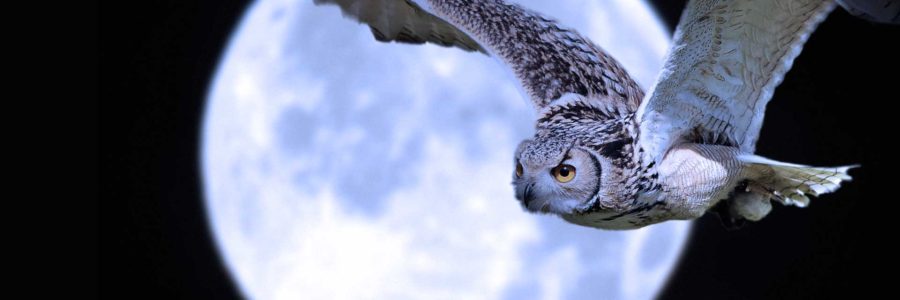
That night I was awoken by soft but incessant tapping on my window. I sat up and raised the lantern that I keep next to my bed and walked over to the window. I saw that on the windowsill, next to an overturned cup of water, which I had left there before turning in, sat an extraordinary snow owl. It was pecking at the window.
My suspicion was confirmed that this was the horned ogre’s familiar and it came to deliver a message, carefully written on a piece of troglodyte skin, carefully rolled up and tied to the bird’s leg. The message was a snide congratulations on being able to hide the bloodstone from him, but also a promise that he would get the stone eventually. He referred to it as his “quarry,” which I thought was remarkable. He also offered the opportunity to get in touch if I was ever in need of it, saying that Blackwing would know how to find him.
I tossed the skin in the flames of the low fire in my room and went back to bed.
7th Day, 1st Ride, 10th Month, 1374th Year
The following morning, at breakfast, I discussed my plans to depart from Glister after the winter. David, Jago and Quentyn were there, and so was Ser Fosco. I explained myself and suggested that I was perhaps to travel onward to the Dalelands, but that nothing was set in stone yet.
David, to his credit, was quick to offer help of finding the grimoires during the winter months. Quentyn reminded me that traders could be persuaded to buy scrolls from Thentia and bring them to Glister for my consumption. I, however, didn’t believe that Lord Marbrand’s grimoires were out there to find in the keep at Wizard’s Hill, otherwise I would have found them already. And also didn’t think that buying scrolls, which is expensive, was going to give me the speed of development that I yearned for. I thanked them for the offer nonetheless.
10th Day, 1st Ride, 10th Month, 1374th Year
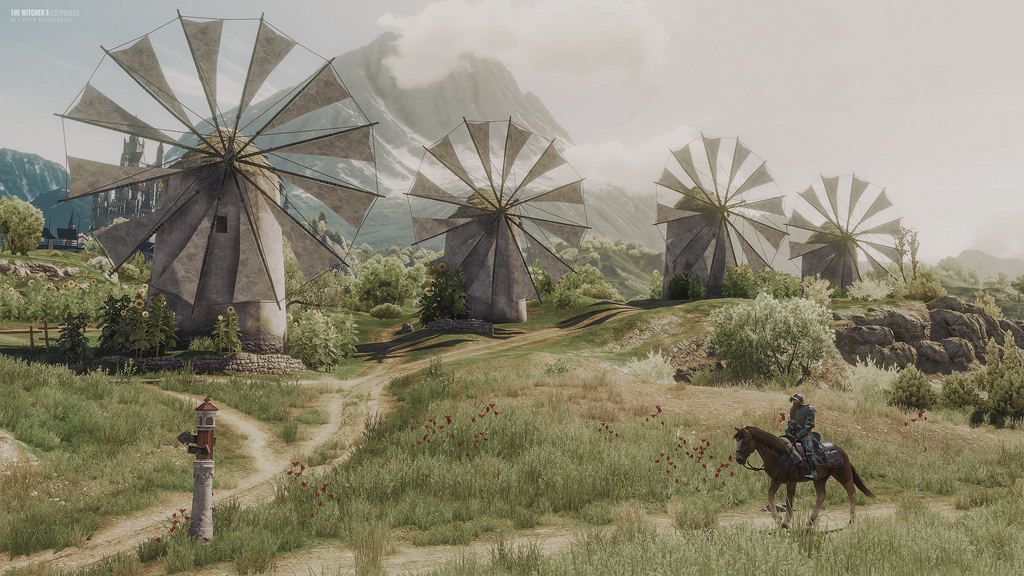
A few days went by and I found myself in the process of making some sketches of a windmill that I wanted to design. I had noticed the winds across certain parts of the Oldmark could be high, which would make it an excellent place for a good windmill in which we could place a large millstone for grinding. It could simultaneously act as a granary.
I already had the design for the internals mechanics drawn up, partly by my own design, and partly taken from different books in Lord Marbrand’s study. The only thing to calculate was the load bearing capacity that the outer framework would need to have, and come up with a pleasing design that was within the capacity of the woodworkers of Glister to accomplish.
To be honest, while Glister could use a more advance grain storage, and could definitely benefit from a windmill, the only reason I was engaging in the mental exercise of designing it was because of the stagnation I feel in my studies. It’s not uncommon for magically talented people with a stellar intellect to seek diversions in matters of engineering and crafting.
There was a knock at the door. It was Quentyn, informing me that two guardsmen had come calling to inform him that a wounded troglodyte had appeared at the ferry across the moat dividing the Oldmark from the Newmark. We decided to go to the ferry together to investigate. The walk was tedious, and once again Quentyn remarked that a couple of horses in the lord’s stable wouldn’t be misplaced.
When we arrived at the ferry we saw a slight figure standing across the moat. She wore a severed troglodyte hand around her neck. Oxul’Nitha. She was severely wounded.
We felt little threat from her, so Quentyn and I, together with two militia men, made our way across the moat by ferry. I was there to translate, but Quentyn did most of the talking. The militia men were commanded to keep an eye on our surroundings.
She came to deliver us a warning; the horned ogre had three stones with entities inside, and it wanted the bloodstone. He had a white one, probably the one that we saw the the ogre take out during our encounter on the northern shore of the shadowed lake. When we asked her where the ogre found the stone, she pointed to the north-west, in the direction of the abandoned mine. Another stone was red, and had been found somewhere on the Thar. The last one was black, and Oxul’Nitha couldn’t say where the ogre had found it. When we asked her where the ogre was staying, she said that it was staying in the mountains somewhere east of the High Pass keep.
The shaman seemed very wounded, tired, and resigned to her death. When she wanted to leave, Quentyn decided that she wasn’t going to steal away into the night for a slow death. He would have her head on a spike, and he drew his sword. Like a cornered wolverine, she fought fiercely! She ultimately fell to the combination of my magic and Quentyn’s Scalebane.
During the fight, she was lobbing small globes of fire at us. The dragonskin doublet made me over-confident, and I stepped in front of Quentyn to protect him, trusting the doublet to absorb the fire. It would have, had I not gotten too close to Oxul’Nitha, close enough for her to swipe at me with her claws. Her nails raking into my skin probably physically hurt me as much as anything ever has, reminding me once again that I was going to have to do something about my own protection soon.